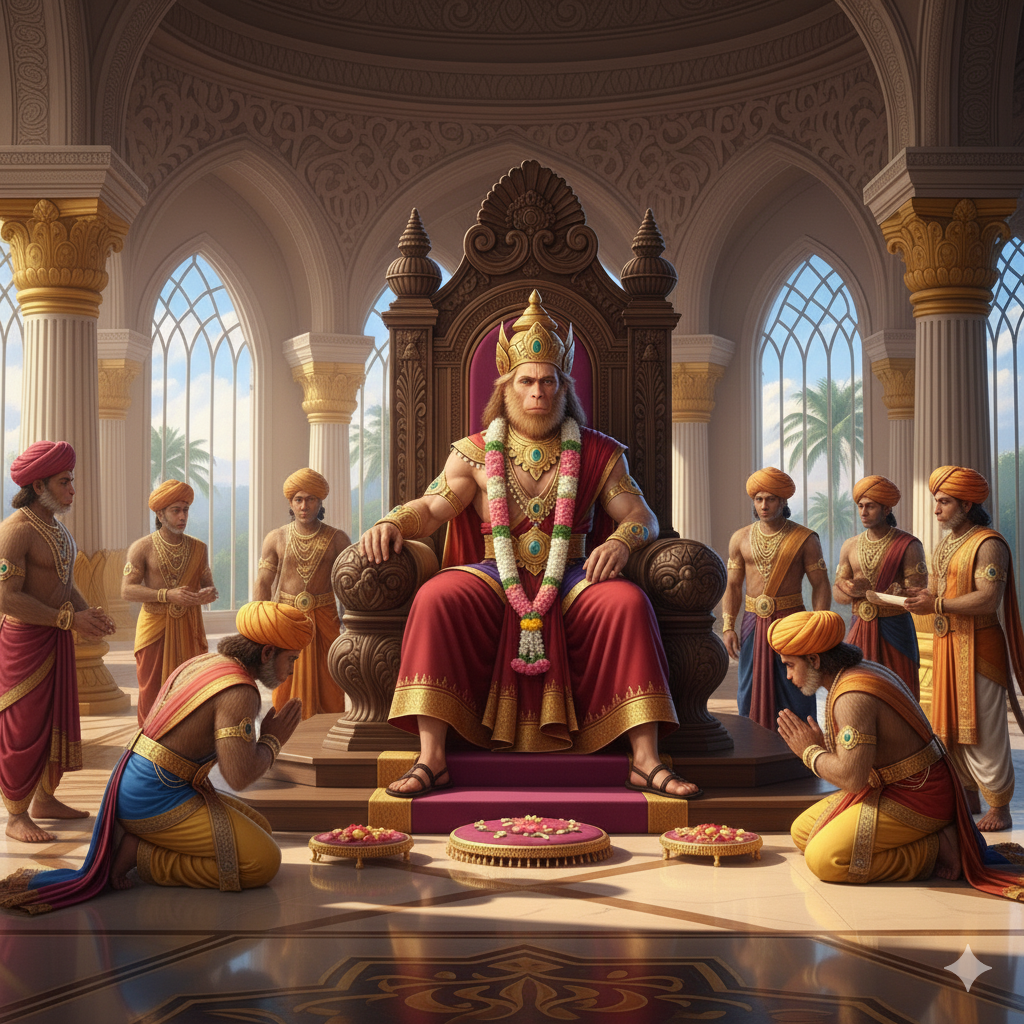
Goddess Lakshmi Puja at Home
Importance and Seasonal Timing of Hindu Festival Celebrations
Hindu festivals are deeply tied to the seasons and have profound cultural, social, and agricultural significance.
- Spring (Vasanta): This season is marked by festivals of new beginnings and renewal.
- Holi: A festival of colors, it celebrates the end of winter and the triumph of good over evil.
- Vasant Panchami: Dedicated to Goddess Saraswati, this festival marks the start of spring and the worship of knowledge and arts.
- Summer (Grishma) and Rains (Varsha): These seasons are celebrated with festivals of community and harvest.
- Rath Yatra: In Odisha, this festival celebrates Lord Jagannath’s journey to his aunt’s temple, signifying the welcoming of the monsoon.
- Ganesh Chaturthi: Celebrated during the monsoon season, this festival brings communities together in a shared devotion to the “remover of obstacles.”
- Autumn (Sharad): This is a time of major festivals that emphasize the victory of light and righteousness.
- Navaratri/Durga Puja: A nine-night festival honoring the Divine Feminine (Shakti), celebrating the triumph of Goddess Durga over a demon.
- Diwali: Known as the “Festival of Lights,” it commemorates the return of Lord Rama to Ayodhya after defeating Ravana. It symbolizes the victory of good over evil and light over darkness.
- Winter (Hemanta) and Cool Dews (Shishira): These seasons celebrate the harvest and the solar transition.
- Makar Sankranti/Pongal/Lohri: Celebrated in mid-January, these harvest festivals mark the sun’s northward journey, signifying longer days. They are a time of giving thanks for a bountiful harvest.
The ritual cycle of Hindu festivals, with its regional variations and seasonal ties, reinforces a profound connection between the human, natural, and spiritual worlds.
You can learn more about the science behind the Hindu calendar and how it connects to these traditions in this video.
Ganesh Puja
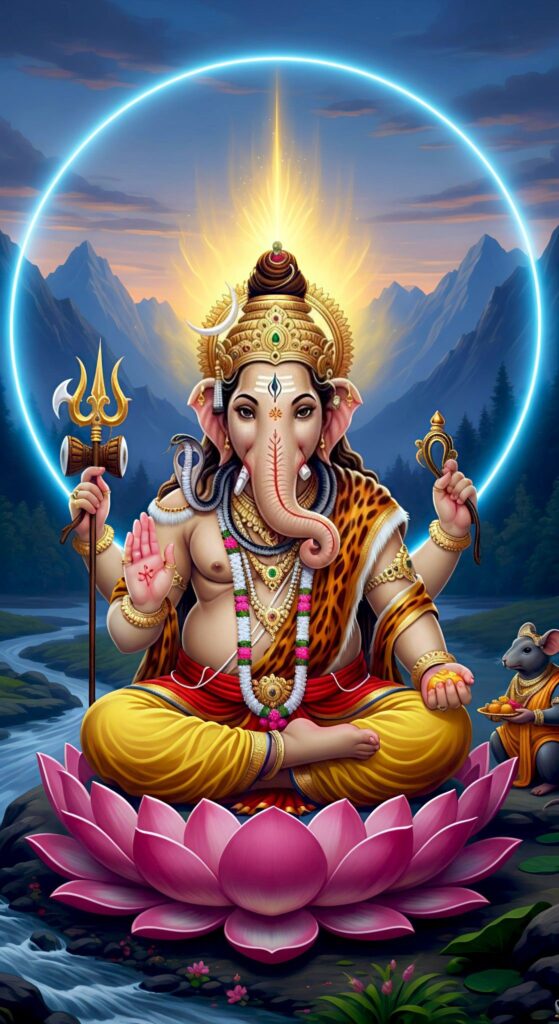
Ganesh Chaturthi, also known as Vinayaka Chaturthi, is a vibrant Hindu festival celebrated to honor the birth of Lord Ganesha, the elephant-headed deity. It is one of the most widely celebrated festivals in India, particularly in the states of Maharashtra, Gujarat, and Karnataka. The festival spans ten days, beginning on the fourth day (Chaturthi) of the Hindu lunar month of Bhadrapada.
The celebration is marked by the installation of beautifully crafted clay idols of Lord Ganesha in homes and public pandals (temporary stages). The idols are brought home with great joy and fanfare, and a special ritual called Pranapratishtha is performed by a priest to invite the deity to reside in the idol. This is followed by a 16-step ritual of worship, known as Shodashopachara Puja, which includes offering various items like flowers, sweets, and modaks (a sweet dumpling considered Lord Ganesha’s favorite).
Ganesh Mantra
Chanting mantras is a central part of Ganesh Puja. The most popular and powerful mantra dedicated to Lord Ganesha is:
ॐ गं गणपतये नमो नमः
Transliteration:
Om Gan Ganapataye Namo Namah
Meaning: “Salutations to Lord Ganesha.”
This mantra is a powerful tool for invoking Lord Ganesha’s energy and blessings. It is believed to be a Bija (seed) mantra, which contains the essence of the deity. Chanting this mantra before any new venture or ritual is considered highly auspicious as it is believed to remove obstacles and ensure success.
Image of Ganesh : who bestows wisdom and removes all evils
Why This Day Is Auspicious
Ganesh Chaturthi is considered highly auspicious for several reasons:
- The God of New Beginnings: Lord Ganesha is revered as the “Vighnaharta,” the remover of obstacles. Worshipping him on his birthday is believed to clear any hurdles in one’s path and bless new beginnings with success and prosperity.
- Symbol of Wisdom and Intellect: Ganesha is also the patron deity of intellect, wisdom, and knowledge. Worshipping him is a way of seeking blessings for a sharp mind, good judgment, and success in academic or professional pursuits.
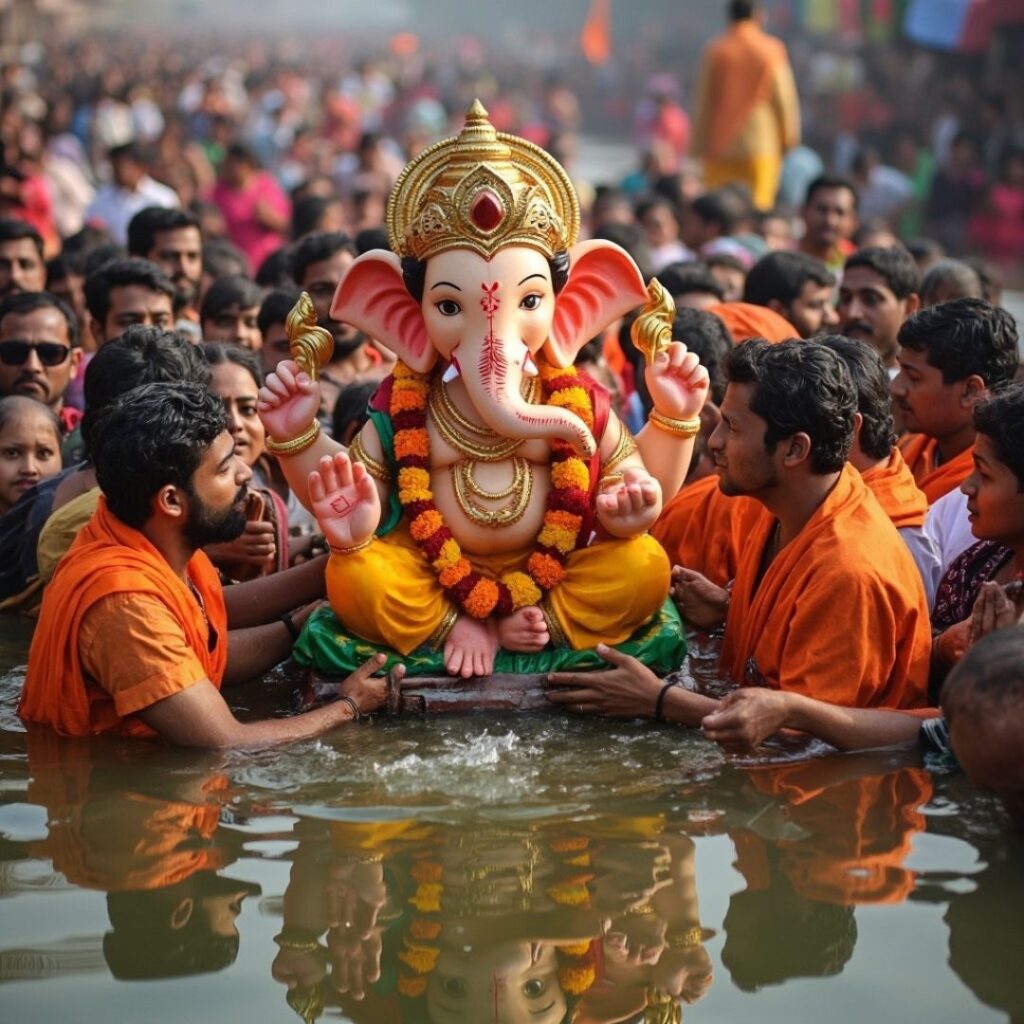
- The Cycle of Life: The festival’s conclusion, Ganesh Visarjan (immersion of the idol in water), holds profound philosophical meaning. It symbolizes the cycle of creation and dissolution, reminding devotees of the impermanence of the physical world and the journey of the soul back to its divine source.
Events and Activities on This Auspicious Day
Ganesh Chaturthi is a time of great community spirit and devotion. Beyond the main puja rituals, several events can be performed to celebrate this auspicious day:
- Idol Installation (Murti Sthapana): The primary event is bringing the idol of Lord Ganesha home and installing it on a beautifully decorated altar. This is done with great reverence and is a focal point of the celebrations.
- Daily Aarti and Bhajans: Throughout the ten-day festival, families and communities perform morning and evening Aarti (waving of a lamp with devotional songs). Singing bhajans and devotional songs dedicated to Lord Ganesha is a common activity that brings people together.
- Food Offerings (Naivedya): Preparing and offering special food, especially modaks, is a key ritual. The food offered to the deity is then distributed as Prasad to family, friends, and guests, symbolizing the sharing of blessings.
- Community Gatherings and Cultural Events: In public pandals, communities organize various cultural events, including plays, dance performances, and art competitions based on themes related to Lord Ganesha. These events foster a sense of unity and collective celebration.
- Charity and Service: Many people use this auspicious occasion to perform acts of charity. This can include donating food, clothes, or money to the needy.
- Eco-Friendly Celebrations: With growing environmental awareness, a significant event is the use of eco-friendly Ganesha idols made from natural clay or mud. This ensures that the immersion (visarjan) process does not harm rivers and lakes.
Anant Chaturdashi Vrat – Devotion to the Infinite:
Significance
Anant Chaturdashi honors Lord Vishnu in his eternal form—Anant, the infinite. It is also the final day of Ganesh Chaturthi, when devotees immerse Ganesha idols in water, symbolizing the cycle of creation and dissolution3.
The word Anant means endless, and the vrat is observed to seek protection, prosperity, and spiritual continuity.
Rituals & Observance
🪔 At Home
- Cleanse the space and take a holy bath before sunrise.
- Set up a puja altar with an image of Lord Vishnu and a Kalash (sacred pot).
- Offerings: Fruits, puris, kheer, and sweets.
- Durva grass is offered to represent Sheshnag, Vishnu’s divine serpent.
- Tie the Anant Sutra—a sacred thread with 14 knots:
- Men tie it on the right arm
- Women tie it on the left arm
- Recite the Anant Vrat Katha and chant Vishnu mantras.
The Anant Sutra
This thread symbolizes the 14-year vow of devotion. Each knot represents a year of commitment to Lord Vishnu’s infinite grace. It is worn for 14 days or until the next Anant Chaturdashi.
Vrat Katha (Legend)
The story centers on Sage Kaundinya and his wife Sushila. Sushila observed the Anant Vrat and tied the sacred thread, bringing prosperity. Kaundinya, skeptical, removed the thread and faced misfortune. After realizing his error, he performed penance and observed the vrat for 14 years, regaining divine favor1.
Other legends link the vrat to:
- Yudhishthira and the Pandavas during exile
- King Harishchandra, who regained his kingdom through this fast
Mantras for Worship
- ॐ अनन्ताय नमः – Salutation to the infinite Vishnu
- ॐ नमो भगवते वासुदेवाय – Invocation of Lord Vishnu’s divine presence
Mythological Significance of Ananta Chaturdashi
1.The Legend of Sage Kaundinya and Sushila
This is the most widely recited story during Anant Chaturdashi Vrat:
- Sushila, the devoted wife of Sage Kaundinya, learns about the Anant Vrat from women worshipping by a riverbank.
- She ties a sacred thread with 14 knots on her arm and performs the ritual with deep faith.
- Kaundinya, skeptical and proud, throws the thread into the fire, dismissing the ritual.
- Misfortune follows: they lose their wealth, their home burns down, and they face rejection from society.
- Realizing his mistake, Kaundinya wanders in search of Lord Anant, encountering symbolic visions and hardships.
- Finally, Lord Vishnu appears, disguised as a Brahmin, and instructs Kaundinya to observe the Anant Vrat for 14 years to restore his life.
The 14 knots on the Anant Sutra represent each year of the vow, symbolizing endurance, humility, and divine protection.
2. Yudhishthira and the Pandavas
Another powerful tale links Anant Chaturdashi to the Mahabharata:
- During their exile, Yudhishthira seeks guidance from Lord Krishna.
- Krishna advises him to observe the Anant Vrat to overcome suffering and reclaim dharma.
- Through devotion and discipline, the Pandavas eventually regain their kingdom.
This story emphasizes faith during adversity, and the belief that divine grace flows when ego dissolves3.
Symbolism of Ananta
- Ananta is also the name of Sheshnag, the cosmic serpent on whom Lord Vishnu rests.
- Worshiping Ananta is believed to remove Kaal Sarpa Dosha, cleanse karmic debts, and invite infinite blessings.
- The sacred thread (Anant Sutra) is tied to invoke protection, continuity, and spiritual strength.
Connection to Ganesh Visarjan
Anant Chaturdashi also marks the farewell immersion of Lord Ganesha, blending Vishnu’s eternal presence with the emotional release of form. It’s a day of letting go, trusting the divine cycle, and embracing the infinite.
Would you like help designing a visual timeline of Kaundinya’s journey or a symbolic thread graphic for your readers to download and use during the vrat? We could even create a mantra-infused meditation based on this story. Let’s make the myth come alive.
Vishwakarma Puja
Celebrated on Kanya Sankranti, this day honors Lord Vishwakarma, the divine architect who built Dwarka, Lanka, and the Pushpak Vimana.
Vishwakarma Puja – Annual Timing
Month & Tithi
- Month: Bhadrapada (usually mid-September)
- Tithi: Celebrated on Kanya Sankranti, the day the Sun enters Virgo (Kanya Rashi)
- Gregorian Date Range: Typically falls between September 16–18
Yearly Pattern
| Year | Date (Approx.) | Tithi |
|---|---|---|
| 2025 | Sept 17 | Kanya Sankranti |
| 2026 | Sept 17 | Kanya Sankranti |
| 2027 | Sept 17 | Kanya Sankranti |
This puja is especially popular in Odisha, Bengal, Assam, and Karnataka, where artisans, engineers, and factory workers worship tools and machines as sacred extensions of divine creation.
Rituals
- Worship of tools, machines, Vehicles, and workspaces
- No work performed post-puja—a gesture of reverence
- Offerings: Flowers, incense, sweets, and Vishwakarma Chalisa
Cultural Significance
Observed widely in Odisha, Bengal, Assam, and Karnataka, it blends spirituality with industrial gratitude.
Navaratri
There are four Navratris each year, but the two most widely observed are
Read More →
Leave a Reply