The Gayatri Mantra is one of the most revered and powerful mantras in Hinduism. It is found in the Rigveda and is dedicated to the Vedic solar deity Savitr.
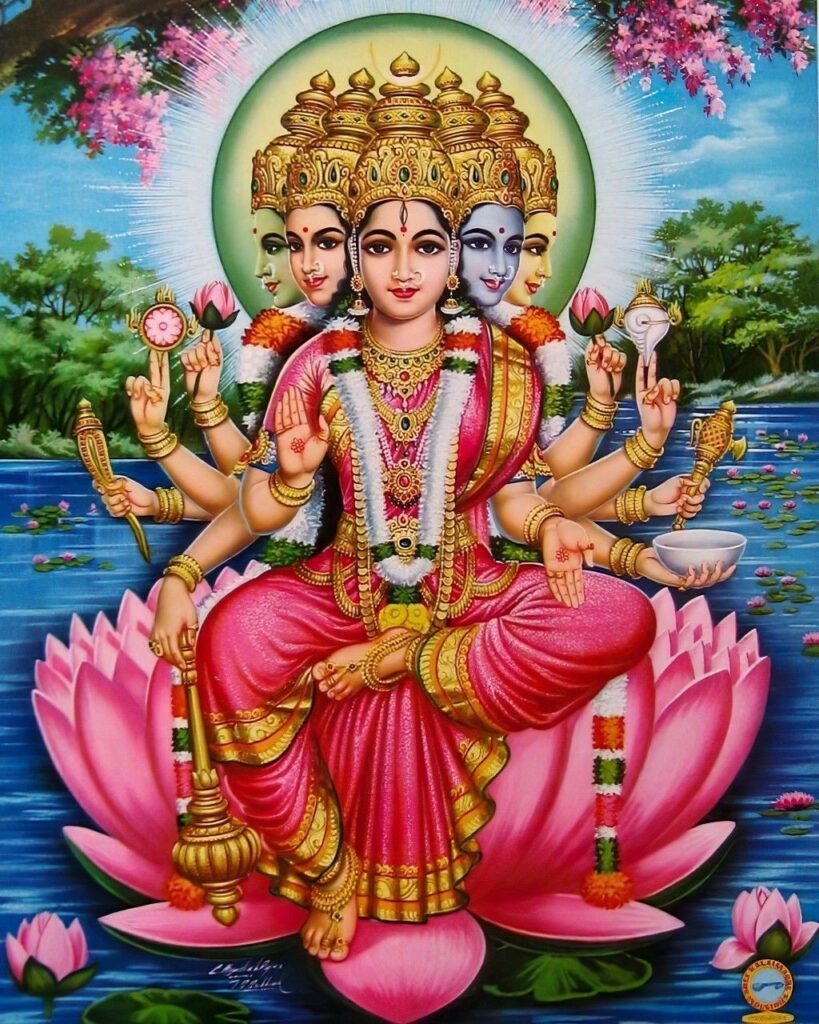
ॐ भूर्भुवः स्वःतत्सवितुर्वरेण्यं भर्गो देवस्य धीमहिधियो यो नः प्रचोदयात्
Sanskrit
ॐ भूर्भुवः स्वःतत्सवितुर्वरेण्यंभर्गो देवस्य धीमहिधियो यो नः प्रचोदयात्
Transliteration (in English script):
Om Bhur Bhuvah Svah Tat Savitur Varenyam Bhargo Devasya Dhimahi Dhiyo Yo Nah Prachodayat
English
The following is a common English translation of the Gayatri Mantra:
“We meditate on the transcendental glory of the divine and effulgent Savitri, the sacred Sun God. May he stimulate our intellect and inspire us with true wisdom.”
Meaning
The Gayatri Mantra is essentially a prayer for intellectual and spiritual enlightenment. It is a profound request to the divine for the highest form of wisdom and a clear mind.
- Om: The primeval sound of the universe, the symbol of Brahman (the ultimate reality).
- Bhur: The physical world, the earthly plane.
- Bhuvah: The mental world, the space in between.
- Svah: The spiritual world, the celestial plane.
- Tat: That (referring to the supreme reality).
- Savitur: The sun, the source of all light, life, and knowledge.
- Varenyam: Worthy of adoration, supreme.
- Bhargo: The effulgence, the radiance, the spiritual light.
- Devasya: Of the divine, the divine reality.
- Dhimahi: We meditate.
- Dhiyo: Intellect, understanding.
- Yo: Who.
- Nah: Our.
- Prachodayat: May he inspire, enlighten, or guide.
The mantra essentially says, “We meditate upon the divine light of the Sun, the source of all life. May this light illuminate our minds and guide us on the path of righteousness and truth.”
Chanting Process
The Gayatri Mantra is traditionally chanted during the morning, noon, and evening twilight. The process of chanting is as follows:
- Preparation: Sit in a comfortable and quiet place. You can sit on a mat with your legs crossed, keeping your back straight. Close your eyes and take a few deep breaths to calm your mind.
- Focus: Concentrate on the meaning of the mantra and its powerful vibrations. Imagine a brilliant, golden light entering your body from the top of your head and filling your entire being.
- Chanting: Chant the mantra out loud at first, and then you can transition to a soft whisper or even silent repetition. The traditional practice is to chant it 108 times, which is why a mala (rosary beads) is often used to keep count.
- Rhythm and Pace: Chant at a steady and calm pace. Do not rush. The rhythm and sound of the mantra are just as important as the meaning.
- Conclusion: After chanting, sit in silence for a few minutes. Absorb the positive energy and vibrations created by the mantra. This helps to integrate the spiritual energy into your being.
The Gayatri Mantra is not just a collection of words; it is a sacred prayer that is believed to purify the mind, provide protection, and lead to spiritual awakening.
Chanting Process
The Gayatri Mantra is traditionally chanted during the morning, noon, and evening twilight. The process of chanting is as follows:
The Gayatri Mantra is much more than just a simple verse; it’s a foundational element of Vedic thought and a powerful tool for personal transformation. Here’s some additional information that sheds light on its deeper aspects:
The History and Origin
- Vedic Roots: The Gayatri Mantra is one of the oldest known chants in the world, appearing in the Rigveda, one of Hinduism’s most sacred texts, dating back to at least 1500 BCE.
- Attributed to a Sage: The mantra is traditionally attributed to the sage Vishvamitra. The story goes that he, through intense penance and spiritual struggle, received this divine knowledge and, with a compassionate heart, chose to share it with all humanity, not just a select few. This makes it a universal prayer.
- The Mother of the Vedas: The Gayatri Mantra is often called the “mother of the Vedas” (Vedamata) because it is believed to be the essence of all four Vedas. Its profound wisdom is said to be contained within its 24 syllables.
The Deeper Meaning
While the literal translation is a prayer for enlightenment, the Gayatri Mantra is a complex metaphor for the relationship between the individual and the cosmos.
- Solar Deity Savitr: The mantra is dedicated to Savitr, the solar deity. However, Savitr is not just the physical sun. He symbolizes the “divine light of consciousness” that is the source of all life and knowledge. Chanting the mantra is a way of invoking this inner light to dispel the darkness of ignorance.
- Three Planes of Existence: The first line, “Om Bhur Bhuvah Svah,” is known as the Mahavyahriti or “Great Utterance.” It represents the three fundamental planes of existence:
- Bhur: The physical world, the realm of the body.
- Bhuvah: The astral or mental world, the realm of the mind and emotions.
- Svah: The celestial or spiritual world, the realm of the soul. This structure of the mantra is a way of aligning oneself with all three dimensions of reality.
Benefits of Chanting
The benefits of chanting the Gayatri Mantra are believed to be both spiritual and physical, affecting a person’s entire well-being.
- Spiritual Enlightenment: The primary purpose is to awaken one’s inner light and spiritual consciousness. Chanting is said to purify the mind, cleanse the aura, and lead to spiritual growth and self-realization.
- Improved Concentration: The rhythmic repetition and focus required to chant the mantra are thought to enhance memory, concentration, and mental clarity, which is why it is often recommended for students and professionals.
- Physical Healing: The specific vibrations generated by chanting the mantra are said to activate certain nerve endings on the face, improving circulation and promoting better oxygen flow to the body. This can help with various physical ailments and improve skin health.
- Emotional Well-being: Chanting the mantra can have a calming effect on the nervous system, reducing stress, anxiety, and negative emotions. It can instill a sense of peace and stability.
Different Forms of Gayatri Mantra
While the original Gayatri Mantra is dedicated to Savitr, the “Gayatri” meter (a specific 24-syllable structure) has been used to compose mantras for other deities as well. These are often called “Gayatri Mantras” for a specific god or goddess. Each one follows the same basic format, but invokes a different divine energy. Examples include:
- Ganesha Gayatri: For removing obstacles and gaining wisdom.
- Shiva Gayatri: For spiritual growth and peace of mind.
- Lakshmi Gayatri: For wealth, prosperity, and abundance.
- Saraswati Gayatri: For knowledge, creativity, and the arts.
These variations make the Gayatri tradition highly versatile, allowing a practitioner to focus their devotion and energy on a specific deity while using the powerful structure of the original mantra.
Leave a Reply