Karva Chauth is a significant Hindu festival celebrated predominantly by married women in northern and western India. It falls on the fourth day (Chaturthi) after the full moon in the month of Kartik according to the Hindu lunar calendar, which corresponds to October or November in the Gregorian calendar. In 2025, Karva Chauth will be observed on October 10th.
The festival is marked by a strict day-long fast (nirjala vrat) where women do not eat or drink water from sunrise until they sight the moon in the evening. The fast is observed with prayers for the well-being, prosperity, and long life of their husbands. Women perform rituals including taking a pre-dawn meal called Sargi, which is typically provided by their mothers-in-law, applying henna (mehendi), wearing traditional clothes and jewelry. They also gather for a communal prayer (puja) in the evening.
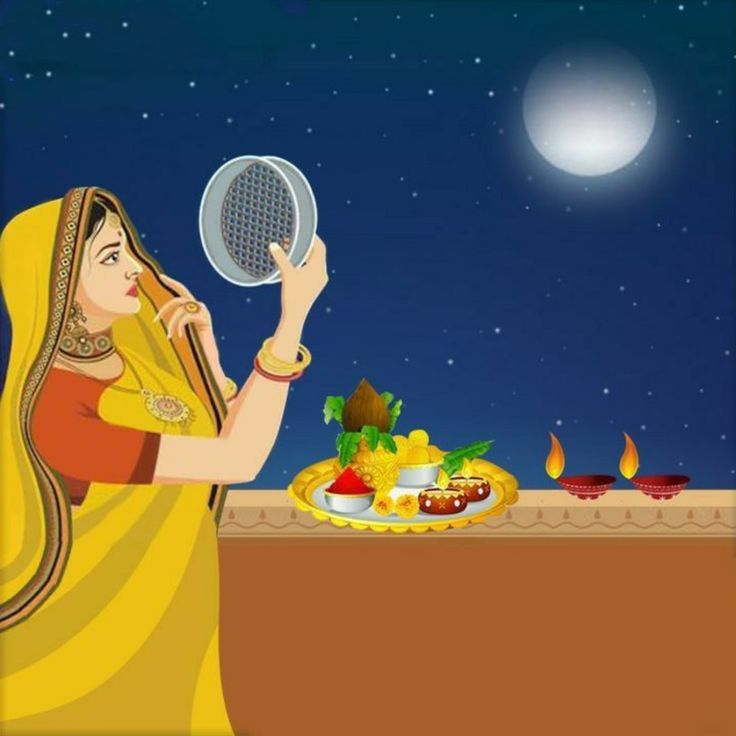
The ritual culminates at moonrise, when women view the moon through a sieve, offer water (arghya) to the moon. Then they look at their husbands through the same sieve. This ceremonial exchange breaks the fast, often followed by the husband giving water and food to his wife.
The Ritual of Offering Arghya
After a day of fasting, women gather at night to sight the moon and pour pure water, often mixed with milk and flowers, in a gentle stream from a vessel towards the moon. This act symbolizes gratitude, renewal of marital vows, and invokes lunar blessings. According to tradition, offering arghya to the moon completes the fast and is considered auspicious and essential for a blissful married life.
Spiritual Significance
The moon is seen as a symbol of calmness, peace, and nourishment in Hindu culture. On Karva Chauth, the moon is revered as a giver of soubhagya (marital bliss), health, and well-being. Offering arghya signifies respect for these qualities and the hope that they will manifest in the devotee’s own home and relationship.
Benefits Associated with the Ritual
- Longevity and well-being of husband: The ritual is performed with the intention of blessing one’s husband with a long, healthy life.
- Marital bliss: Arghya is believed to strengthen bonds of love and trust between spouses.
- Spiritual purification: The act purifies the mind and fulfills the fast with gratitude and humility.
- Fulfillment of desires: Many believe sincere participation in this ritual brings prosperity, peace, and joy to the family.
Sanskrit Śloka Relevant to the Ritual
The following traditional mantra is often recited while offering arghya to the moon on Karva Chauth:
करकं क्षीरसम्पूर्णा तोयपूर्णमथापि वा।
ददामि रत्नसंयुक्तं चिरञ्जीवतु मे पतिः॥
Pronunciation:
Karakam kṣīrasampūrṇā toyapūrṇamathāpi vā,
Dadāmi ratnasaṃyuktaṃ cirañjīvatu me patiḥ.
Translation:
“I offer this sacred vessel full of milk or water, studded with jewels—may my husband have a long life.”
Significance in Modern Times
In today’s world, the ritual of offering arghya stands as a symbol of commitment, mutual care, and cultural continuity. Beyond its spiritual merits, it fosters togetherness in families and communities, serving as a reminder of the values of faith, gratitude, and love.
The origin and significance of Karwa Chauth are tied to various legends and stories emphasizing marital devotion as well as the power of fasting. One well-known tale is about a devoted wife named Karva, who outwitted Yama, the god of death, to save her husband’s life by fasting and earnest devotion. Another popular legend references the story of Savitri and Satyavan, where Savitri’s determination and prayers brought her husband back from death’s clutch.
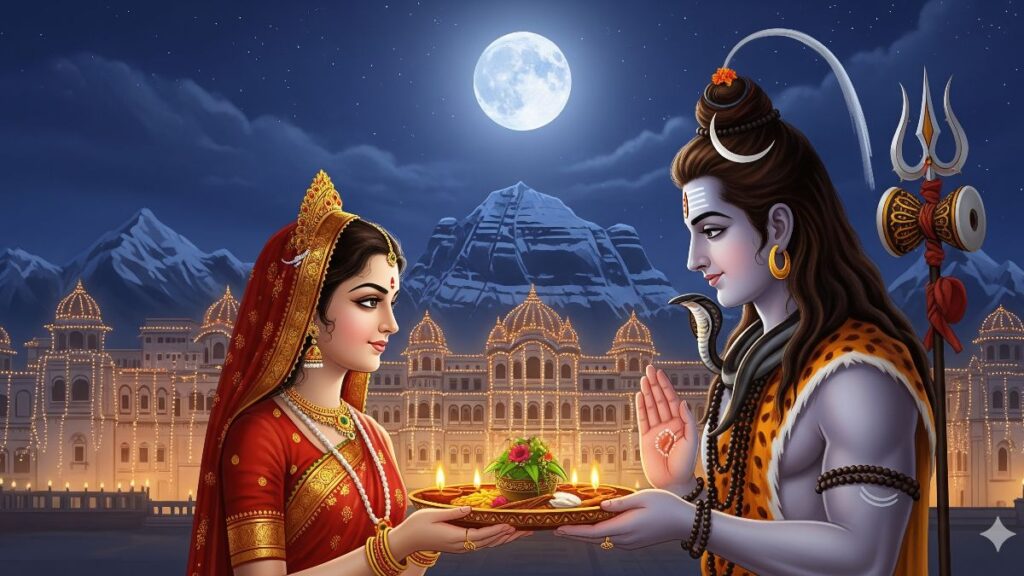
The festival is also linked to the worship of Goddess Parvati, who is believed to have performed this fast to secure Lord Shiva as her husband, symbolizing marital bliss and commitment. Besides married women, unmarried women also observe the fast hoping for a happy marital life.
Karwa Chauth is celebrated with enthusiasm especially in states like Punjab, Haryana, Rajasthan, Gujarat, Uttar Pradesh, and Himachal Pradesh, and includes cultural songs, storytelling, and gift-giving rituals. The festival celebrates love, fidelity, and the sacred bond of marriage.
In 2025, key timings for Karwa Chauth are:
- Fasting begins early morning on October 10th after Sargi.
- Puja Muhurat (auspicious time) for the evening puja is from around 5:57 PM to 7:11 PM.
- Moonrise, marking the time to break the fast, will be at approximately 8:13 PM
Karva Chauth has several interesting dimensions that enrich the understanding of the festival beyond its core rituals:
Regional Variations:
- In Punjab and Haryana, Karva Chauth involves large community gatherings with folk songs, mehendi (henna) ceremonies, and festive attire emphasizing colors like red and gold symbolizing prosperity and marital bliss.
- Rajasthan women exchange decorated clay pots (karvas) to symbolize unity, while Gujarat showcases elaborate jewelry and ethnic attire during celebrations.
- In Jammu & Kashmir, special mud idols (kuth) are crafted for worship and women wear traditional Kashmiri garments blended with vibrant festival colors.
- In Bengal and Northeast India, a unique tradition includes teenage boys fasting as a symbolic gesture of future marital harmony.
- Urban areas in Maharashtra and Gujarat, not historically observing Karwa Chauth, now increasingly embrace the festival, especially influenced by media and cultural migration.
Health and Ayurvedic Benefits:
- Fasting during Karva Chauth promotes mental clarity by enhancing brain function.
- It helps detoxify the body by flushing out toxins from channels called strotas.
- Fasting supports immune system renewal by recycling cells (autophagy).
- Ayurveda suggests different fasting methods for different body types, including juice fasting or fruit fasting for those who cannot do complete nirjala fasting.
Modern Practices and Social Impact:
- More husbands actively participate by fasting or supporting their wives, symbolizing mutual love and respect.
- Social media platforms enable women to share celebrations, creating community connections virtually.
- Pregnant or ill women adapt fasting practices for health without losing traditional essence.
- The festival fosters women’s empowerment by offering emotional connection, solidarity, and a break from regular chores.
- Some feminist critiques view it as reinforcing traditional roles, while others see it as celebrating womanhood and resilience.
Sargi and Food Rituals:
- Sargi, given by the mother-in-law, is a pre-dawn meal with energy-rich foods such as sweets, dry fruits (almonds, cashews), coconut, fresh fruits, and light cooked items like vermicelli or halwa.
- It is essential to hydrate and consume nutrient-rich foods before the day-long fast.
- Women often gift or donate items like mehendi, fruits, and clothes as part of the ritual after the fast ends.
The festival thus blends cultural richness, spiritual significance, health benefits, and evolving social meanings that keep it relevant and widely celebrated across India and among Indian communities worldwide
Leave a Reply